

Including cultures and faiths
The issues we need to address to secure peaceful sustainable co-existence for us all now and into the future include climate change, economic justice and communities living peacefully together. We can only address these challenges if we act TOGETHER.
We can make a much bigger difference to future outcomes if we begin to act now.
One World Week is an opportunity, a space in which we can meet up, share concerns, hear each other’s points of view, understand difference and acknowledge shared values.
In order to involve people of various cultures and faiths we need to find a way of contacting and meeting them. While some OWW organising committees have included people from many religions and cultures for years, others have found it much more difficult.
These suggestions aim to help you approach people and organisations appropriately and help to smooth the way in what can be a sensitive situation.
- to see our top tips, a printable resource to aid your inter faith planning, click here
- to see our inter faith resources, click here
- to see the Faiths Working Together Toolkit, a joint publication by The Inter Faith Network and Near Neighbours, click here
OWW welcomes events held by people of all faiths and none
It may be helpful to explain to local organisers and volunteers that:
OWW has changed from pursuing a development education agenda with the Christian churches (in the 1970s), to a broader perspective today involving people of many faiths, cultures and ethnicities in its events, management and preparation of resources.
Since 2005, OWW has been an independent Charitable Company engaged in development education with people and organisations of many faiths and none. This has been reflected in the variety of types of events in the UK and around the world and in the increasingly varied composition of the trustees, staff and local organising committees. OWW is non-sectarian and non-political and seeks to be inclusive.
We still very much welcome all the OWW church events are held throughout the country, and support these with a range of worship resources commissioned annually. We are indebted to the loyalty of our organisers, many from the Christian community, who have enabled OWW to reach so many over the years! We hope that such volunteers can pass on their knowledge of OWW to other Church and faith groups.
Please visit our pages: About OWW ; Our Vision for further information and Case Studies for examples.
What does a OWW inter faith event look like?
Working with an inter faith organising group does not mean that the events have necessarily to be focussed on faith – a key characteristic of a OWW event is that it has a global dimension. OWW events variously combine inclusiveness with celebrating diversity and the exploration of serious issues raised by the OWW theme with having fun together.
The term ‘inter faith’ is sometimes used to emphasise that one of the intentions of an activity is to build relationships and increase understanding between people of different faiths or beliefs. ‘Multi faith’ might be used in this way, or more broadly to describe activities (or groups) that involve people of different faiths or beliefs but where this may not be a primary intention.
How do I organise an inter faith event for OWW?
Try to involve any local inter faith group and representatives of cultural groups right from the start of the planning process so that everyone has a sense of ownership and responsibility for its success.
Set up a meeting to plan an interfaith OWW event
- Start by approaching one or more of the following, to find out about existing inter faith activities in your local area:
- Your nearest local inter faith group - consult The Inter Faith Network’s list here
- Your nearest local race and equality network organisation – your local authority should be able to put you in touch.
- Your local community’s coordinating body for voluntary organisations can advise on contacts (find your local office at National Association for Voluntary and Community Action (NAVCA) in England and Wales Council for Voluntary Action (WCVA) in Wales).
- Choose the day and date carefully for your initial meeting (and for any subsequent event) to ensure that people with religious obligations and festivals are not excluded - consult The Inter Faith Network’s calendar of Faith Festivals here
It may be that a OWW event can be added to an organisation’s existing calendar.
There are the main sources of information to help you:
- The OWW 'Form a new local OWW group!' page for general advice on organising and planning a OWW event.
- the UK Inter Faith Network website
- The Northern Ireland Inter Faith Forum's.Threads of Compassion - Guidelines for multifaith and interfaith events,
OWW shares many values with the Inter Faith Network and has worked and consulted with them for many years. One World Week, and our local organising committees, have our own approaches, and we have drawn upon IFN's materials in a way which reflects OWW’s approach.
IFN’s website has lots of ideas, downloadable publications, contact information and guidance to help you be aware of potential sensitivities all which can be really useful in organising a OWW event that involves people of various cultures and faiths.
The Inter Faith Network leads INTER FAITH WEEK in November and has long experience of organising Inter Faith events and activities. This website has ideas and resources for working with (e.g. Young People) and resources to help you.
Code of Conduct
If you want your OWW event to involve dialogue with people of various faiths it is worth downloading The Code of Conduct, and printing the leaflet “Building Good Relations with People of Different Faiths and Beliefs” for use with your planning committee.
What kind of an event?
To decide what kinds of activity would be appropriate, take a look at the Inter Faith Network's range of ideas derived from its Inter Faith Weeks and explored in its publications:
Inter Faith Week Toolkit - Download here
or see the Inter Faith Week Events here and suggestions for local Inter Faith Organisations here
You can then consider how you might adapt these ideas to make them relevant to the current OWW theme.
Similarly, past OWW events can inspire ideas and models for similar or new events
What about an inter faith worship or service?
These can be very controversial and need to be handled with great care and sensitivity. Read more in the resource: "Interfaith Worship or Acts of Reflection and Commitment" which you can download here
Walks
One idea on the IFN website is arranging visits to particular local places of worship to learn more about the faith in question.
The idea has been adapted for OWW in Swansea and in Portsmouth where a parade with banners about the year's theme visited each place of worship in turn and had a short talk and discussion about that faiths approach to the issue raised by the OWW theme.
Liverpool and Bolton have each produced booklets of faith trails or walks.
Visit the OWW photo gallery for Portsmouth's 'Walking Together" version of an inter faith walk.
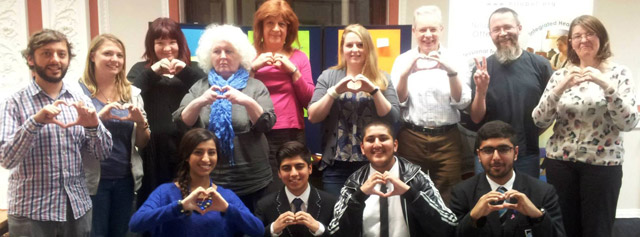
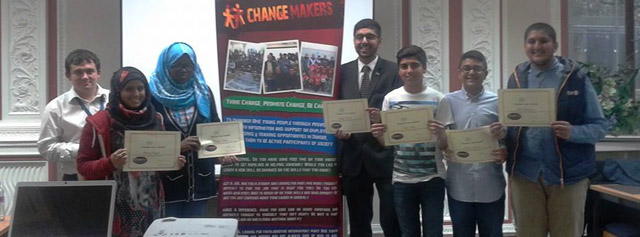
Events involving young people
The Inter Faith Network encourages young people to get involved with inter faith activity and bridge building between communities. More here .
It has a dedicated microsite created by, with and for young people, ‘Young people and inter faith engagement’ access it here: One of the observations from an event in 2014, ‘Young Voices, Young Agents for Change’, was:
” Young people care about big issues – climate change, poverty, injustice in the world and in their neighbourhoods - and it is important to support them in the work they aspire to in these areas”
Participating organisations are listed here
Schools
You could also approach your local SACRE (Standing Advisory Council for Religious Education); which all local authorities have; see if they would get involved with a OWW event. More here
Other useful links:
Alliance of Religions and Conservation. ARC
Black Environment Network: BEN
BEN promotes equality of opportunity with respect to ethnic communities in the preservation, protection and development of the environment.
Threads of Compassion - Guidelines for multifaith and interfaith events, produced by the Northern Ireland Inter-Faith Forum (with others) might also be useful to refer to - http://niinterfaithforum.org/index.php/news/113-threads-of-compassion-guidelines-for-multifaith-and-interfaith-events
Links to other interfaith bodies can be found here on the IFN’s website:
This page lists national and regional inter faith organisations in IFN membership. National bodies may be active UK-wide or in any of the nations (England, Northern Ireland, Scotland and Wales) of the UK. Regional bodies are usually active in a particular region within one of the nations.
Some may have expertise in rural areas. One such body is:
3FF builds good relations between people of all faiths and beliefs. They run education, engagement and action programmes that bring diverse communities together.
News
Press Releases
Newsletters
(November 2016)
(October 2016)
(September 2016)
(August 2016)
Recently Added Resources
New Funding Opportunity - The Common Good Fund - Application Deadline 27 Feb. 2017 see more here
Organisers' Evaluation form for 2016 events Download from here
Wordsearches for Including You events - download them from here
Press release template for 'Including You' events download here
Quotations about building an inclusive peaceful society - Download from here a 5 page booklet as a word.doc or pdf
Pledges to build an inclusive society - find them here
"Who is a Migrant?" - anactivity/game to get people talking to each other at your events. Download the instructions here
School Assemblies from Christian Aid- link to and download a PowerPoint and notes
Looking for a speaker for your event? Download here a list (pdf) from the Discussion page (posted 12 Sept 2016)
Faith resources relating to "Including You".Download pdf here links to materials offered by OWW's partners and supporters: worship, discussion, films ...plus Prayers for OWW(updated 7 Sept '16)
Presentation "A OWW approach to Migration" Download this PDF version of a 12 slides (15 -20 minutes) powerpoint
Need funding for your event? Apply to Big Lottery Celebrate Fund! NOW or you'll be too late for OWW more here and other suggestions
Poster/ flyer design kit - download from here
2016 Leaflets "Including You" download PDF versions here
Introductory PowerPoint about organising local inclusive OWW events - updated for 2016. Down load ppt here
Migrant crisis or poverty crisis? - A briefing paper from Global Justice NOW Download as a PDF here
2016 - "Including You" - Booklet of ideas, links and resources for interpreting the theme. Dowload a PDF here (updated July 2016)
Learning resource/activity for young people about peace - from Fly Kites not Drones; suitable for activites in or out of school. find links here: schools ; activities (added Nov. 2015 but still relevant for this years events)
Organisers' Evaluation Form for event organisers to complete and send to OWW - down load the word.doc from here